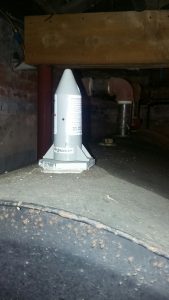
It might sound crazy, but I’ve got a rocket on my oil tank. I know what your thinking – that it’s dangerous. It isn’t. Here’s why. The rocket is the “OEM ROCKET” and is the ultrasonic oil tank sensor that I installed many years ago, maybe 15, to replace the old manual float that had decided to get caught up on the inside of the tank somehow. Here’s a picture of the rocket I’m talking about. It sends a periodic radio transmission to a receiver up in kitchen which displays the amount of oil in the tank. I don’t
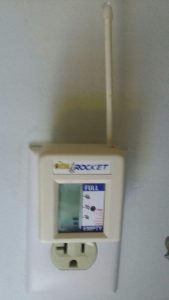
have to go down in the cellar to check the level. The display shows roughly 1/4 full. I don’t have automatic delivery, but for those who do, you might not care about something like this because those fuel oil delivery programs should do a good job keeping your tank from running out. They use degree day calculations and stuff like that. Since I don’t use automatic oil delivery and I pick different oil vendors depending on price, so this little unit helps me when to make the decision to order oil. Some oil dealers have subscription programs based on this unit by adding a separate receiver/modem so that it can send your information to them, and then you can look at your current and historical information. I’m not paying no stinking oil company any more than I have to, and I don’t like my data going to any more people than need be. I hacked the transmission long ago with a PIC microcontroller – after all it’s not rocket science! Even without the hack, this is a handy piece of equipment in its own right – it will beep and flash a red LED when the oil level gets too low. And before that there’s a flashing “oil nozzle” icon to indicate “time to call for oil”.