That tarp is a 20′ by 30′ light duty cheapo, so I need to finish up this project before winter. The roof is a gambrel style and while 3 of the sections are plywood, the one I need to work on is 1-by lumber. I’ve got to replace a few boards and then shingle the two sides of the roof on this side of the house. I thought about going topless, I mean roofless, but common sense prevailed. If I time this right, google earth might pick up the big blue dot from space. How cool is that? These redneck flags, eh tarps, seen in most everyone’s yard, are a worldwide status symbol of the poor and not-so poor – I’m mostly poor now or someone else would be doing this job.
Working on the Home
Oh, while I’m at it here, that is some seriously neat staging I purchased from Black Bear Ladder here in Lisbon Maine. Makes the job safer and easier, but sure does cost a lot. Heck, now that I’ve got this far, I’m not sure if I can buy the shingles and stuff to actually roof this thing. If anybody knows of a company that makes one big shingle instead of putting hundreds up there, then let me know. I’m thinking it would be nice to have the architectural type design for that.
Just so you know, when I’m done, the house will look pretty much like it did before, but it will be a whole lot, well, … a whole lot doner. I can say things like that because I’ve been approved for AARP.
Well, this subject is not exactly electrifying unless you like knowing what is consuming the power that your electric utility company says that you are consuming. Not only that but perhaps you want to know when. Some electric companies provide access to a program that let’s one peruse your usage data on-line and fancy graphs and such are often available. Other electric utilities provide access to usage data by means of a download capability and you do your own analysis. Others provide both. My power provider has both capabilities, but the download option is up to two days prior to the current day. That last part frustrates me – I like real-time data. You’ll need to check your electric provider to see what is available to you.
Despite what the power companies provide, there’s a bit of work one must undertake to get somewhere with it. Raw numbers or a so-called “Green-Button” format, which has dwindled in vendor supported applications are often two options provided for the download data. I use Raw number, which actually happens to be a CSV file (comma separated values, one line per measurement). Spreadsheet programs can read the CSV format, for example.
What do I do? I download the data from the utility company and capture that into my own database for analysis. Because I don’t trust them so much, I also have my own energy meter hardware and I use an Open-source program called OpenHAB for viewing currents readings, and charting over time. At the moment of this post, I am posting my data at 1 minute intervals for viewing on my computer.
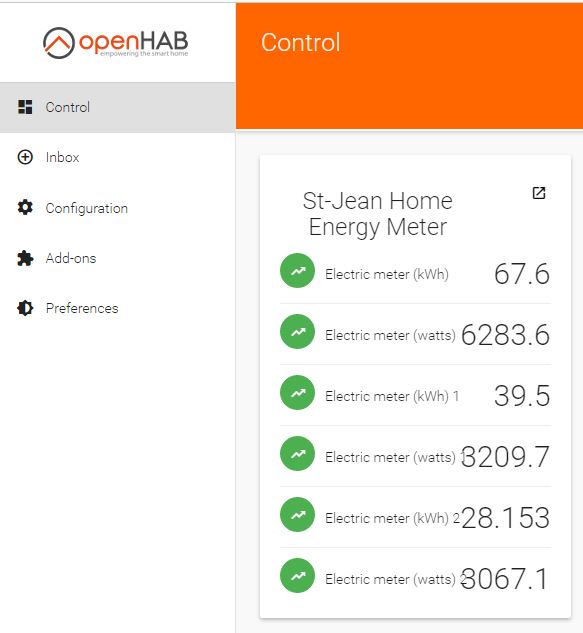
Here is an example of a minute in time from November 8th, 2018. Again, this is data that I have captured with my own energy monitor at the main circuit panel and wirelessly connected to one of my home computers.
What the heck is that you ask?
Yeah, I know what you mean. Well a few days ago I reset my meter, so since that time, my house has consumed 67.6 kWh (Kilowatt Hours). This number will continue to increment unless I reset it again – it’s basically an incremental counter as you use electricity. The second number is the total watts being consumed at the point in time the sample was taken from the power meter. In my case, the 6283.6 Watts is equal to, or there about, the sum of the two power legs, seen here as 3209.7 Watts and 3067.1 Watts. The next minute these numbers may change completely. For example, my home might just be using 500 Watts.
I know a few things about my electric usage, so here’s some partial info. I have an electric hot water heater (yes, boo you say). It uses about 4500 Watts. When my well pump comes on, I can see it uses about 1200 Watts. I have about 500 Watts residual power being consumed by things that are always on, which we all mostly have – computers, tv, etc. So for 6283.6 Watts, I know that my hot water tank is running, the well pump is running, and that leaves 580 Watts for other things that are happening around the house. The hot water tank is power hungry when the kids take showers. The well runs for a few minutes when it falls to the low pressure point preset.
I really need to get a hot water storage tank running off my boiler. I have one, a commercial superstore with two loops, just need to take the time. I’ll use one loop for the boiler and the other loop will eventually have a solar feed. I digress, but hey, we should all be looking to save money.
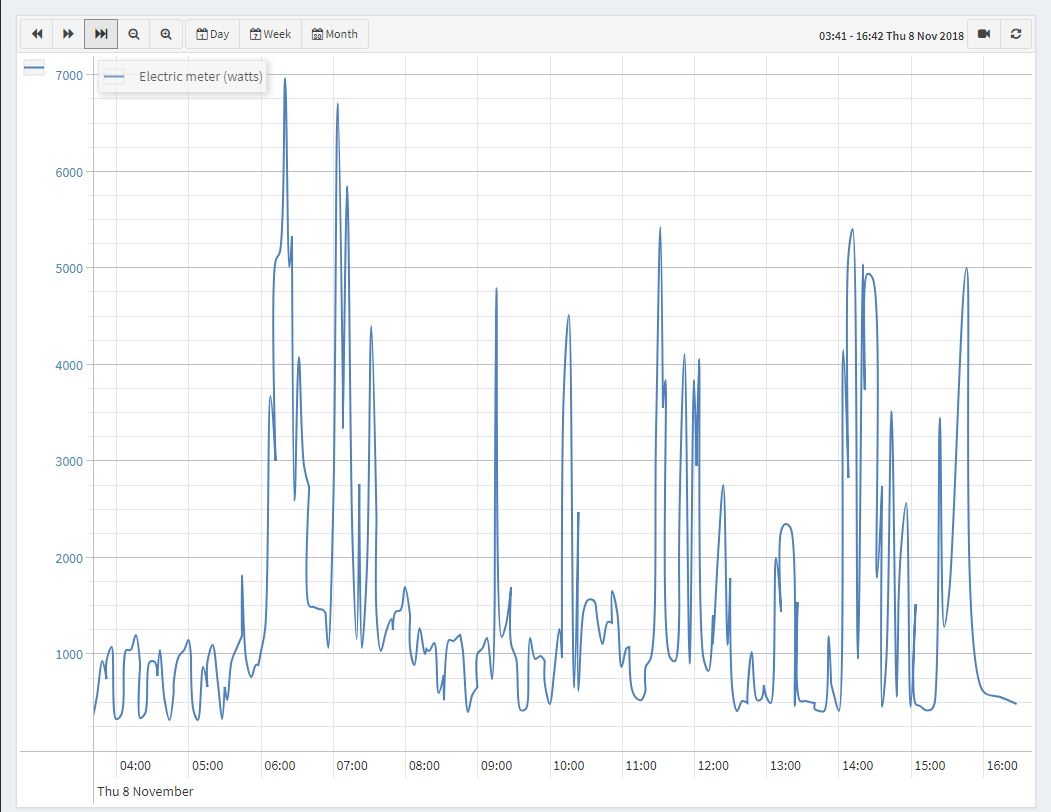
And whoa, you asked for it, here’s a graph for part of the same date.
Energy Consumption – November 8th – Partial Day (about 40F outside).
Just a note about this graph. At about 6am, someone has taken about a 20 minute shower – hot water heater on, the well kicks in, and a 600 Watt space heater is still loading the system. Yeah, that’s right, the house is starting to awake. And around 4pm, that space heater that was on overnight has yet to be turned on for the new evening.
And, I bet your thinking the cops and burglars know this too. I bet they could. But then again I own a rifle.
We have a Samsung gas oven. It has been a satisfactory kitchen appliance for several years now, except for the lack of weekly baking of things like cookies – chocolate chip, peanut butter, snicker doodle, molasses, ginger snap, oatmeal raisin, and so on. Oh! And brownies – dark fudge and blond brownies for sure. And cakes.
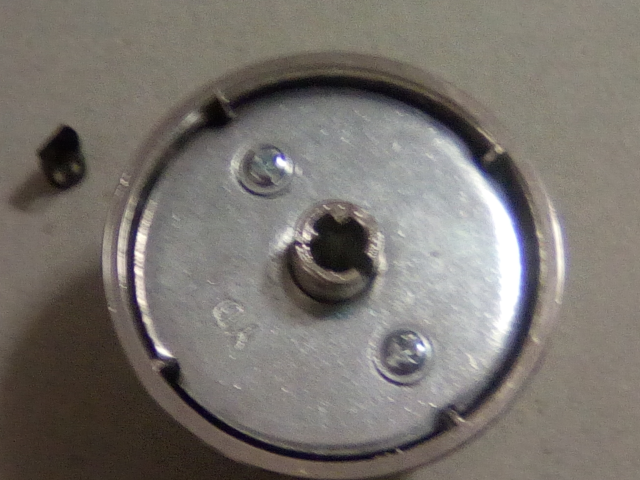
But then there is the situation with the burner knobs that I’m meaning to talk about. Seems we have three knobs that have developed cracks around the knob collar which contains a tension sleeve of sorts within the hole that mates to the stove. The knob itself is plastic, which is why Samsung says not to leave your oven door open when the oven is “hot”. Can you say melted plastic knobs? Inside the back portion of the knob is a large thick “washer” held in place by two screws. This washer gives the knob its weighted feel. On one of our knobs a few pieces have now broken from the collar (see photo).
The knobs cost about $50 each from the vendor to replace, which would be $150 for the currently defective knobs. Can you say outrageous? Come on Samsung. Anyway, a quick perusal around the internet has found this to be a very common problem. Come on Samsung. Solutions range from replacing the knob with a new one to repairing the crack somehow. Given the price, the repair options seemed to grab my attention. Some recommended gluing with superglue and filling missing pieces or large cracks with filler (JB Weld, and others). Others still recommended putting a “sleeve” around the existing collar (there is room back there to do this). One person used a zip tie as the sleeve. Another person used a crimp hose clamp as the sleeve, and a few others incorporated a 1/2″ “pipe” sleeve that fit over the plastic collar. At any rate, there are options here.
The homemade repair options probably would cost anywhere from a couple dimes to a buck per knob. I’m all-in on the full metal sleeve over plastic collar repair. Samsung’s offer is still the same knob with no improvements. New ones will crack the same way until Samsung improves the design.
Home Repair=1, Samsung=0. Pricewise, not even close.
As i mentioned before, the knobs are plastic not Steel. But, with this home repair, they can be better and last longer than the original. Come on Samsung!
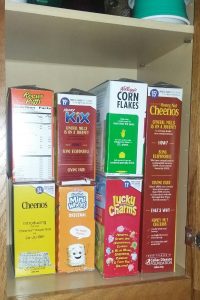
Here’s a view of a kitchen cabinet in my home. After a few servings or so we cut the cereal boxes in half and voila, less box jamming. Simply cut the box in half, pinch the bottom section in a bit, then place top over bottom and slide down as needed. Your don’t have to be perfect either. Check out the photo, you can see the bottom portions just showing a tiny bit – your mileage may vary. The cereal box to the right has not yet reached the stage to cut in half. Good luck.